Denver Investing Strategy
House Hacking in Denver, Colorado
Buy a property, live in one part of it, and rent out the rest so your tenants cover most (or all) of your mortgage. It is the single most accessible way to start investing in Denver real estate — and it is where most of Jeffrey's investor clients begin.
The basics
What is house hacking?
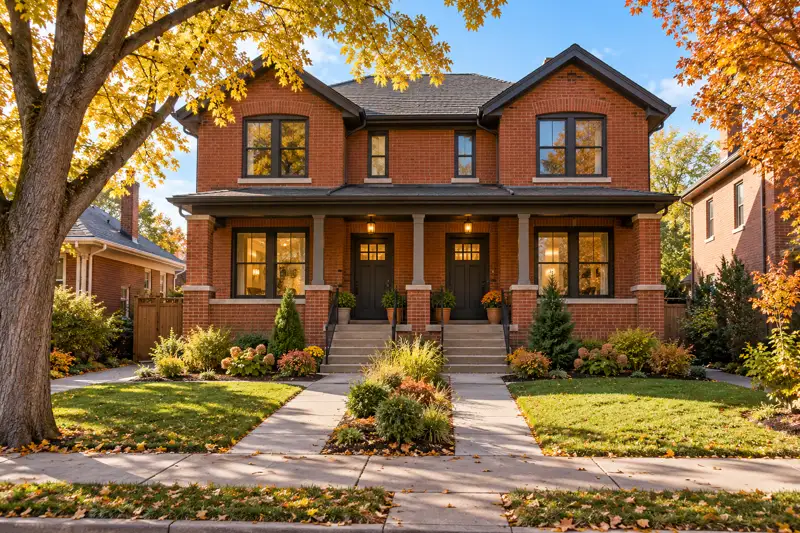
House hacking means buying a property you live in, while renting out the other bedrooms, a basement unit, or a second side of a duplex. The rent your tenants pay offsets your housing payment — sometimes eliminating it entirely.
Because you are living in the property, you qualify as an owner-occupant. That is the critical advantage: owner-occupant financing lets you buy with far less money down than a traditional investment-property loan, which typically requires 20–25% down. An FHA loan can go as low as 3.5% down, and some conventional owner-occupant products go to 5%.
In practical Denver terms, that difference can mean starting your portfolio with tens of thousands of dollars less upfront — which is exactly why house hacking is the entry point for so many first-time investors along the Front Range.
Upside
The benefits
- Drastically lower down paymentOwner-occupant financing (FHA from 3.5% down, some conventional from 5%) instead of the 20–25% a standard Denver investment property loan requires.
- Your housing cost drops — sometimes to zeroRent from roommates or a second unit offsets your mortgage, freeing up cash every month to save toward your next property.
- You learn to be a landlord on easy modeYou are on-site, so maintenance, tenant screening, and turnover all happen where you can see them — before you own a property across town.
- You build equity instead of paying someone else'sEvery payment builds your equity while you would otherwise be handing rent to a landlord.
- A repeatable pathMany investors house hack, move out after the owner-occupancy period, rent the whole property, and repeat — compounding a portfolio over several years.
Reality check
The drawbacks & risks
- You share your spaceWhether it is roommates or a tenant behind a shared wall, house hacking trades some privacy for cash flow. It is not the right fit for everyone, and that is worth being honest about upfront.
- You are the landlordLate-night maintenance calls, tenant screening, and vacancy are now your responsibility. Jeffrey's contractor network helps, but the accountability is yours.
- Owner-occupancy rules are bindingOwner-occupant loans generally require you to live in the property for at least 12 months. Buying one with no intention of living there is mortgage fraud — this strategy only works if you genuinely move in.
- Vacancy still hurtsIf a room or unit sits empty, you cover the full payment yourself. Underwriting a deal that only works at 100% occupancy is how new investors get burned.
- Denver zoning and STR rules matterOccupancy limits, ADU regulations, and short-term-rental licensing vary by municipality across the metro. What is legal in Denver proper may not be in Englewood or Centennial.
Working together
How Jeffrey helps you house hack
Find properties that actually pencil
Not every duplex is a good house hack. Jeffrey screens for layouts with genuine separation, rentable square footage, and rent comps that support the numbers — before you spend a weekend touring.
Run the real numbers first
Full deal analysis on rent potential, vacancy assumptions, capital expenditures, and your true monthly out-of-pocket cost. Reviewers repeatedly credit Jeffrey's deal analysis as the reason they avoided a bad buy.
Connect you with the right lender
Owner-occupant investment financing is its own specialty. Jeffrey introduces you to lenders who understand house hacking and will count projected rental income where allowed.
Contractors after closing
Adding a bedroom, separating an entrance, or making a basement rentable takes trades who show up. Jeffrey's vetted contractor network is available to you after the sale — clients cite it constantly.
Illustrative scenario · not a client result
Case study
A real House Hacking in Denver example
A worked example with round, realistic Denver numbers — not a client deal and not a promise of returns. It shows exactly how Jeffrey models a duplex house hack before you ever write an offer: purchase price, the full monthly payment, the rent from the second unit, and what is left for you to pay.
The example: a $560,000 duplex bought with an FHA loan at 3.5% down ($19,600). The estimated payment — principal, interest, taxes, insurance and mortgage insurance — is about $4,150 a month. Rent the second unit for $1,850 and your net housing cost is about $2,300 a month while you live there, instead of renting a similar Denver home on your own. Move out after the owner-occupancy period, rent both units, and the same property is underwritten completely differently — that second set of numbers is in the free spreadsheet below. Real client examples will be added here with permission.
The 2026 reality check
Does house hacking still work in Denver in 2026?
Yes — but not the way it worked in 2020. Denver prices and mortgage rates mean the classic promise of "live completely free in a duplex" is now the exception, not the plan. What still works, reliably, is cutting your housing cost hard while you build equity and rental history: renting a second unit, a basement suite, or rooms to offset 30% to 100% of a mortgage payment, on a home you bought with an owner-occupant loan instead of an investor loan. That is a completely different down payment — 3.5% to 5% instead of 20% to 25% — and it is why house hacking remains the most realistic first step into Denver real estate investing for first-time buyers.
Run every property through three tests before you fall in love with it. First, the while-you-live-there test: after rent from the other unit or rooms, is your net housing cost clearly lower than renting a similar place? Second, the after-you-move-out test: rented in full, does the property at least cover its payment, taxes, insurance, vacancy and repairs? Third, the bad-month test: if a unit sits empty for 60 days, can you carry the full payment without panic? A house hack that passes all three is a plan. One that only passes the first is a gamble with your home. Jeffrey runs all three, with live Denver rent comparables, on every property his clients consider.
Run your own numbers
House hacking calculator: run your Denver numbers
The same calculator from Jeffrey's investment calculators page, right here. Enter a property's full monthly payment, how many rooms or units you would rent, and the rent you expect — and see your real net housing cost.
House hack calculator
See what renting out rooms or a second unit does to your own housing cost.
Estimate only. Excludes maintenance, utilities, and capital expenditures. Not financial advice.
Want the deeper version? Download the free Denver house hacking spreadsheet — it models both views, while you live there and after you move out, with vacancy and maintenance reserves built in.
Free download
Download the free Denver house hacking spreadsheet
Spreadsheets are how Denver's serious house hackers actually underwrite deals, so here is Jeffrey's, free and with no sign-up wall. The file models one property two ways — while you live there, and after you move out and rent it in full — with fields for down payment, rate, taxes, insurance, rent by unit or room, vacancy and maintenance reserves, and your true net housing cost.
Download the spreadsheet (CSV, opens in Excel & Google Sheets)
Fill in the yellow input cells with a real property's numbers. Not financial advice — bring the completed sheet to a free consultation and Jeffrey will pressure-test it with you.
Pick your format
5 ways to house hack in Denver
1. Duplex, triplex or fourplex
The classic. Live in one unit, rent the others. Small multi-family is Denver's strongest house-hack format because the rent is real, the privacy is real, and FHA and VA loans both allow owner-occupants to buy up to four units with low or no down payment.
2. Single-family home with an ADU
Buy a home with — or with room to add — an accessory dwelling unit: a basement apartment, a garage conversion, or a backyard cottage. ADUs keep everyone under one address but behind separate doors, which many first-time house hackers find far more livable than sharing a kitchen.
3. Basement or mother-in-law suite
A finished basement with a separate entrance, a kitchenette and proper egress windows can rent long-term or mid-term. This is often the cheapest route into house hacking in older Denver and Englewood housing stock — and the one where permits and safety rules matter most.
4. Rent by the room
A larger single-family home near a university, hospital or light-rail line, rented room by room, can produce the highest total rent of any format. It also takes the most management. Model rooms conservatively — many Denver landlords underwrite roughly $850 to $1,100 per room before vacancy — and check occupancy rules before you buy.
5. Live in, renovate, then rent
Buy a dated home with an owner-occupant renovation loan, live there while the work happens, then rent it in full when you move to your next home. Slower, but it stacks house hacking with forced appreciation — the pattern many Denver investors repeat into a small portfolio.
The money
Financing a Denver house hack
FHA loans: 3.5% down on 2–4 units
An FHA loan lets an owner-occupant buy a duplex, triplex or fourplex with about 3.5% down. On 3–4 unit properties, FHA's self-sufficiency rule applies: the property's appraised rents must cover the full payment. Expect mortgage insurance, and expect the appraisal (Fannie Mae Form 1025 for small income properties) to drive the deal.
Conventional loans: from 5% down
Newer conventional programs allow owner-occupants to buy 2–4 unit homes with as little as 5% down, and low-down-payment options like HomeReady can fit single-unit homes with an ADU or rooms to rent. Stronger credit usually wins better pricing here than FHA.
VA loans: 0% down for eligible buyers
Eligible veterans and service members can buy up to four units with no down payment, live in one, and rent the rest — the most powerful house-hacking loan in Denver when you qualify. Lenders may ask for reserves and some landlord experience on larger buildings.
Renovation loans: FHA 203(k) and HomeStyle
Buying a duplex that needs work? FHA 203(k) and Fannie Mae HomeStyle renovation loans roll the purchase and the rehab into one owner-occupant mortgage — the practical route to basement suites and legal conversions that do not exist yet.
How lenders count rent — the 75% rule
Lenders typically credit about 75% of projected or existing rent toward your qualifying income, taken from the appraiser's rent schedule. That haircut is deliberate: it assumes vacancy and costs. Underwrite your own numbers the same conservative way. Owner-occupied loans also require you to actually move in and live there, generally for at least 12 months — compare that with a standard investment loan at 20% to 25% down, and the house-hacking advantage is obvious. Current conforming loan limits for Denver County are published by the FHFA, and Jeffrey will connect you with a local lender to price your exact scenario before you shop.
Official sources: HUD / FHA loan basics · VA home loan eligibility · Fannie Mae (HomeStyle & HomeReady) · FHFA conforming loan limits
Where it works
Best neighborhoods for house hacking in Denver
The full ranking lives in Jeffrey's neighborhood guide; this is the shortlist he starts every house-hack search with. See also the areas he serves across the metro.
For duplexes and 2–4 units: Capitol Hill and North Capitol Hill, Five Points and Curtis Park, and Baker / South Broadway — older small multi-family stock, deep renter demand, and walkable locations that keep vacancy low.
For single-family homes with an ADU or suite: Park Hill and Montclair, Washington Park and Congress Park, Berkeley, the Highlands and Sloan's Lake — larger lots, alley access and basement-friendly floor plans. Jeffrey's Berkeley area page shows why that neighborhood keeps making house hackers' lists.
For value and cash flow: West Colfax, Sun Valley, Globeville and Elyria-Swansea, and North Park Hill — lower entry prices, more rent-by-room and conversion potential, and more homework required on condition and zoning. Just south of Denver, Englewood deserves its own look: older bungalows, basement potential and light-rail access at prices below the Denver average.
For mid-term and professional demand: areas near the University of Denver, Auraria and the big hospital campuses rent well to traveling professionals on 30+ day stays — see Jeffrey's mid-term rentals guide for how that model compares.
Denver house hacking neighborhoods at a glance
| Area | Best house-hack format | Why it works | Watch out for |
|---|---|---|---|
| Capitol Hill & Five Points / Curtis Park | Duplexes and 2–4 units | Deepest stock of small multi-family, strong long-term renter demand, walkable to downtown jobs | Older systems, parking, permit history on converted units |
| Baker / South Broadway | Small multi-family, converted homes | Renter-friendly corridor, light rail and nightlife demand, steady appreciation | Pricing already reflects investor demand — underwrite rent hard |
| Park Hill & Montclair | Single-family with ADU or basement suite | Larger lots, alley access, family renters who stay longer | Higher entry prices; ADU build costs decide the deal |
| Berkeley, Highlands & Sloan's Lake | ADU-ready lots, rent by the room | Premium rents, Tennyson Street and lake demand, professional tenants | Top-of-market entry prices; suites must be legal, not assumed |
| West Colfax, Sun Valley & Globeville | Value buys, conversions, rent by the room | Lower entry prices and the best gross rents relative to price in central Denver | Condition, zoning homework, flood-plain checks on specific streets |
| Englewood (just south of Denver) | Basement-suite house hack, duplex | Older bungalows with basement potential, light-rail access, prices below the Denver median — see the Englewood guide | Unpermitted basement finishes are common; licensing differs from Denver |
| Aurora near Anschutz Medical Campus | Mid-term rentals, rent by the room | Traveling medical professionals on 30+ day stays pay furnished premiums | Aurora's own rental rules; hospital demand is seasonal |
Stay legal
Denver rules you must know before you house hack
ADUs. Colorado's HB24-1152 and Denver's own ADU updates have made accessory dwelling units legal across most residential lots — in many cases without an owner-occupancy requirement, and HOAs cannot simply ban them. Permits, building codes and a certificate of occupancy still apply. Start with the City of Denver's guidance at denvergov.org and confirm the specific lot before you count ADU rent in a deal.
Rental licensing. Denver requires a residential rental licence for rental properties, with a passed inspection. Renting a unit, a basement suite or rooms long-term is renting — budget the time and cost of licensing into every house hack.
Short-term rentals. Denver allows Airbnb-style rentals essentially only in your primary residence, with a licence. A house hack built on STR income from a unit you do not live in is a house hack built on sand — underwrite long-term or mid-term rent first and treat anything else as a bonus.
Occupancy, zoning and HOAs. How many unrelated people may live in a home, whether a property is zoned for multiple units, and what your HOA allows all vary by address. Jeffrey flags these checks during the search, and you confirm them with the city and the HOA before closing — never after.
Keep more of it
Taxes for Denver house hackers
Rental income from your house hack is taxable, and part of your home becomes a rental in the IRS's eyes: you will typically split expenses between the personal and rental portions, report the rental side (commonly on Schedule E), and depreciate the rented portion of the property — which is also why a future sale can involve depreciation recapture. Room rentals, a rented unit and a rented ADU are all treated slightly differently. This page is a map, not tax advice: house hackers should have a CPA who works with landlords review the first year before filing. Jeffrey will happily introduce you to local professionals his investor clients use.
Your first move
Step by step: your first Denver house hack 2014 the 10-step checklist
- Set your comfort line: shared walls, shared kitchen, or fully separate unit?
- Get pre-approved as an owner-occupant — FHA, conventional or VA — before touring anything.
- Pick two or three neighborhoods from the list above that fit your budget and your format.
- Build your numbers template with the calculator and spreadsheet on this page.
- Tour like an investor: entrances, meters, ceiling heights, egress, parking and lot layout, not just finishes.
- Check the rules per address: zoning, ADU potential, rental licensing, HOA documents.
- Underwrite at 75% of asking rents, with vacancy and maintenance reserves — then decide your offer.
- Close and complete any permit or licence steps before advertising a unit or room.
- Screen tenants properly and use a Colorado-compliant lease from day one.
- Track everything separately — rent, expenses and reserves — so year two's next house hack is easy to finance.
Ready to start at step one? Call Jeffrey at 720-951-6868 or book a free consultation.
The Denver snapshot
Denver house hacking numbers at a glance
Competitor guides rank on this page's topic with one thing Jeffrey's original page had none of: current Denver numbers. Here is the snapshot his analysis starts from — Denver County market data compiled October 2026. Figures move monthly and vary street by street, so treat them as the starting point of an underwrite, never the answer.
| Figure | Denver County snapshot (Oct 2026) | What it means for a house hacker |
|---|---|---|
| Median home price | About $546,000 | A duplex near the median is the classic first house hack — see the worked example on this page |
| Median rent | About $1,889 / month | The baseline one unit or suite must beat after vacancy, not before it |
| Gross rental yield | About 4.15% | Denver is an equity-and-cost-reduction market, not a high-yield market — price the appreciation honestly |
| Apartment vacancy | About 7.6% | Underwrite at least 5–8% vacancy; a plan that needs 100% occupancy is not a plan |
| Rent per room (modeled) | About $850–$1,100 / month | The rent-by-room range to test against live listings near universities and hospitals |
| Owner-occupant down payment | 3.5% FHA · 5% conventional · 0% VA | Versus 20–25% down on a straight investment loan — the entire house-hacking advantage |
Sources: Denver County market data compiled October 2026 from public market trackers. Jeffrey re-runs every figure live, for the specific property and street, before any client writes an offer.
Do the paperwork first
Build a simple house hack pro forma
A pro forma is the one-page forecast serious Denver house hackers build before they offer — the spreadsheet on this page is exactly that, and here is what belongs in it. Money in: rent from every unit, room and suite, each cut by a vacancy allowance, plus any laundry or parking income you can prove. Money out: the full payment (principal, interest, taxes, insurance, mortgage insurance, HOA), utilities you will cover, maintenance at 5–8% of rent, a separate capital-expenditure reserve for roofs and furnaces, rental licensing and management if you will not self-manage forever. The three answers it must give: your net housing cost while you live there, the cash flow after you move out, and the result in a bad year — two vacant months and one appliance failure. If a seller or listing agent shows you a pro forma instead, rebuild it with your own rents and their actual tax and insurance figures, because furnished-rent fantasies are the oldest trick in small multi-family.
House hacking for beginners: is it right for you?
House hacking for beginners works when three things are true at once. You are comfortable being a landlord where you live — boundaries and a real lease make it professional instead of awkward. Your job and life can keep you in the property for at least the 12 months your owner-occupant loan requires, and ideally two or three years. And the numbers still work at conservative rents, because a first property you can hold through a slow year teaches you more than a perfect spreadsheet you had to sell. You will hear the phrase "live rent-free" constantly in this niche; in Denver in 2026 that outcome is rare and usually needs rent-by-room or a fourplex. The honest beginner goal is to live for a fraction of market rent in a home you own, in a neighborhood you like, while someone else's rent builds your equity.
| House hacking | Renting | Traditional investing | |
|---|---|---|---|
| Upfront cash | 3.5–5% down (0% VA) | Deposit + first month | 20–25% down |
| Monthly cost | Payment minus tenant rent | Full rent, building nothing | No personal housing benefit |
| Equity | Yes — your tenants help pay the loan down | None | Yes |
| Privacy | Depends on format — separate units score best | Fully your own space | You do not live there |
| Work involved | You are the landlord, on site | None | Landlord or a paid manager |
Watch & learn
Watch: how experienced investors evaluate a deal
From Jeffrey's resources library: a BiggerPockets conversation on evaluating opportunities and building an investing plan. Listen for the rent assumptions and reserves the investors insist on — that conservative habit is the difference between a house hack that works in Denver's real numbers and one that only works in a video. Jeffrey applies the same tests, live, to any property you are considering: 720-951-6868.
The Denver house hacking library
Go deeper: the topic guides
Each part of this guide gets its own deep-dive page — built from the questions Denver buyers actually ask:
FAQs
House Hacking in Denver questions, answered
How much do I need to house hack in Denver?
It depends on the loan and purchase price, but owner-occupant financing means far less than a traditional investment property. FHA loans can start around 3.5% down and some conventional owner-occupant products around 5%, versus 20–25% for a standard investment loan. Jeffrey can connect you with a lender to get precise numbers for your situation before you shop.
Do I have to live there, and for how long?
Yes. Owner-occupant loan programs generally require you to occupy the property as your primary residence for at least 12 months. This strategy only works if you actually intend to live there — misrepresenting occupancy on a mortgage application is fraud.
What kinds of properties work best for house hacking?
Duplexes and up/down units are the classic choice, but single-family homes with a finished basement, a separate entrance, an ADU, or simply enough bedrooms to rent by the room all work well in the Denver metro. The right fit depends on your budget, comfort with shared space, and target neighborhood.
Can I house hack more than once?
Many investors do. After satisfying the owner-occupancy period, they move out, rent the entire property, and buy another owner-occupied property — repeating the cycle to build a portfolio over several years.
Is house hacking legal everywhere in the Denver metro?
The strategy itself is legal, but occupancy limits, ADU rules, and short-term-rental licensing differ between Denver, Englewood, Centennial, Littleton, and surrounding municipalities. Jeffrey will flag the local rules that apply to any property you are considering, and recommends confirming with the municipality before you close.
Do I need a permit to rent out a basement apartment in Denver?
Usually, yes. A legal basement rental needs the right zoning, building permits, proper ceiling height, light and ventilation, and egress windows in sleeping areas, plus a passed rental-licence inspection. Many Denver basements were finished without permits — Jeffrey helps you spot the difference before you buy, because unpermitted space cannot be counted on as legal rent.
Can I add an ADU to a Denver home later?
Often, yes. Under Colorado's HB24-1152 and Denver's ADU rules, most residential lots can now add an accessory dwelling unit, subject to permits, size and design standards. Budget real construction costs, confirm the lot qualifies, and never underwrite a purchase on ADU rent until the city confirms it can be built.
Do I need a rental licence to house hack in Denver?
For most rentals, yes. Denver's residential rental licensing program covers properties rented to tenants, including units and suites in a home you also live in. Plan for the application, inspection and renewal in your numbers — it is a normal cost of doing this legally.
How much rent can I expect from a house hack in Denver?
It depends on the format and neighborhood. Full units in small multi-family rent like comparable apartments nearby; rooms in shared homes are often modeled around $850 to $1,100 a month before vacancy. Treat every figure as a hypothesis until it is checked against live comparable rentals — which is exactly what Jeffrey does before you offer.
Other strategies
Compare this with other Denver strategies
Thinking about this strategy?
Get a free, honest deal-analysis conversation. If the numbers do not work, Jeffrey will tell you.