Denver Investing Strategy
Residential Multi-Family Investing in Denver
Duplexes, triplexes, and fourplexes let you own several income streams under one roof and one loan. For investors who want to scale past a single rental without buying scattered properties, small multi-family is usually the next step.
The basics
What counts as residential multi-family?
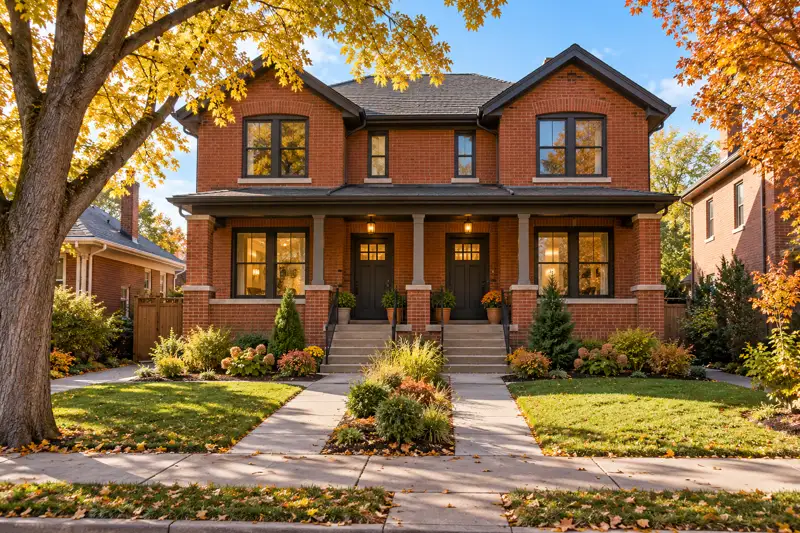
Residential multi-family means two to four units in a single property — duplex, triplex, or fourplex. The four-unit ceiling matters enormously: at four units or fewer, the property still qualifies for residential financing rather than commercial.
That distinction affects your down payment, your rates, your loan terms, and how the property is appraised. Five units and above moves you into commercial lending, where underwriting is driven by the property's income rather than primarily your personal financials.
It also stacks with house hacking. Buying a duplex through fourplex as an owner-occupant lets you combine low-down-payment owner-occupant financing with multiple rental income streams — which is why it is one of the most efficient entry points into Denver investing.
Upside
The benefits
- Vacancy risk is spread across unitsOne vacancy in a fourplex costs you a quarter of your income rather than all of it — a structural advantage single-family rentals simply do not have.
- One roof, one loan, one lotManaging four units at one address is far more efficient than four houses across the metro — maintenance, inspections, and management all consolidate.
- Residential financing up to four unitsBetter rates, terms, and down payment options than commercial multi-family lending.
- Combines with house hackingLive in one unit as an owner-occupant, rent the others, and use low-down-payment financing while collecting multiple rents.
- Income-based valueImproving rents and reducing expenses raises the property's value directly, giving you more control than relying on market appreciation.
Reality check
The drawbacks & risks
- Higher entry priceMulti-family properties cost more upfront than a comparable single-family home, unless you are using owner-occupant financing to offset it.
- More tenants, more managementFour units means four leases, four turnovers, and four sets of maintenance requests. The workload scales with the units.
- Limited inventory in the metroSmall multi-family is scarcer than single-family in much of the Denver area, and competition for good properties is real.
- Older building stockMuch of Denver's small multi-family inventory is older, which can mean aging mechanicals, electrical, plumbing, and roofs. Inspection scope matters.
- Financing is stricter above four unitsCross the four-unit threshold and you are in commercial lending, with different down payment and underwriting requirements.
Working together
How Jeffrey helps with multi-family
Finds inventory before it is obvious
Small multi-family is competitive in the Denver metro. Jeffrey watches for these properties and alerts clients early rather than after they have been widely marketed.
Unit-level analysis
Rent roll review, per-unit rent comps, expense verification, and realistic capital expenditure planning for older buildings — not just a cap rate on a listing sheet.
Owner-occupant structuring
If house hacking a duplex through fourplex is the right entry, Jeffrey coordinates the financing approach so you use owner-occupant terms effectively.
Inspection and contractor support
Older multi-family means mechanical and structural scrutiny. Jeffrey's contractor network helps you understand what deferred maintenance will actually cost before you close.
FAQs
Multi-Family Investing in Denver questions, answered
Why does the four-unit limit matter so much?
Properties with four units or fewer qualify for residential financing, which generally means better rates, better terms, and lower down payment options — including owner-occupant programs. At five units and above you move into commercial lending, where underwriting is driven primarily by the property's income and requirements are typically stricter.
Can I house hack a fourplex?
Yes, and it is one of the most efficient strategies available. Living in one unit as an owner-occupant lets you access low-down-payment financing while three other units generate rent — often covering the entire mortgage.
Is small multi-family hard to find in Denver?
It is meaningfully scarcer than single-family inventory and draws consistent investor competition. Being ready to move quickly, with financing lined up and analysis criteria defined in advance, is what wins these deals.
What should I watch for in older multi-family buildings?
Roof, electrical, plumbing, sewer lines, and heating systems — these are the expensive items, and much of Denver's small multi-family stock is older. Jeffrey builds realistic capital expenditure assumptions into the analysis rather than assuming everything has useful life remaining.
How is a multi-family property valued?
Two-to-four-unit residential properties are generally appraised using comparable sales, similar to single-family homes, though income matters to your lender and to your returns. Larger commercial multi-family is valued primarily on income.
Other strategies
Compare this with other Denver strategies
Thinking about this strategy?
Get a free, honest deal-analysis conversation. If the numbers do not work, Jeffrey will tell you.